Starlight
by Fieldguide with Wästberg + Uniform (2013)
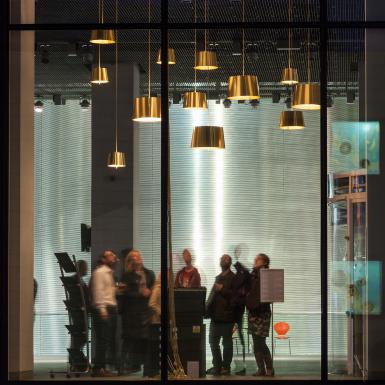
Starlight uses open-space-data to encourage people to observe and engage with the light from stars, light years away.

In 2009 NASA launched the Kepler space observatory to look for habitable, earth-like planets by interpreting the light from far-off stars.
The Kepler observatory looks for planets in a small portion of the Milky Way. When viewed from the vantage point of the observatory, a planet orbiting around it’s parent-star will be seen to pass in front of the star or transit. This transit dims the amount of light the observatory receives.
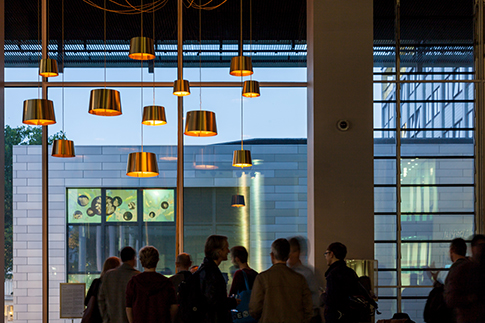
StarLight translates this dimming of light to a human scale. Each lamp represents a fiery sun, when they dim and flicker it illustrates a planet in transit.
What we really like:
It's making data, physical. Bringing data into the tangible. It is a form of data-visualisation, but by taking the data away from the screen and into the physical, it offers the potential for increased engagement and overall imapct of that data.
Some other thoughts:
An installation of this scale (like a couple of other projects on the inspiration page) is too large an object for Objects Sandbox.
Please Note: All of these examples are intended for inspiration purposes only and are a curated selection of what currently exists within the Internet of Things and Academic Research. As ideas they may not have been eligible for Objects Sandbox. Please refer to the eligibility criteria for further information.